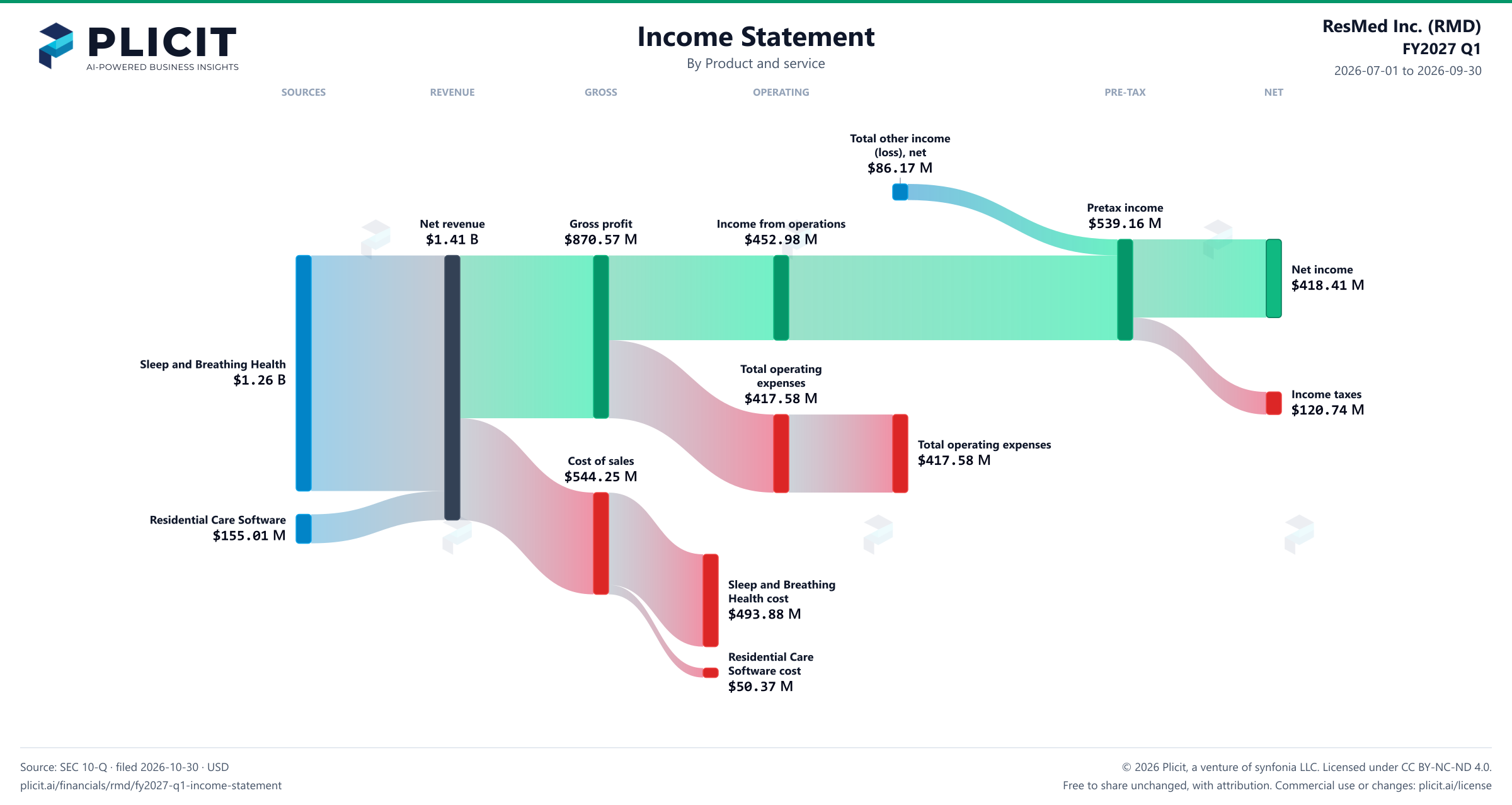
A one-time gain carried most of ResMed's 20% profit jump.
Net income rose 20% to $418.41 M, and that headline reads like a turnaround. The engine underneath is smaller. Operating income, the profit from the main business before interest and gains, rose only 1.4%, to $452.98 M. The gap was filled by a $61.78 M gain on the sale of MatrixCare, which the filing calls non-recurring. After tax, that gain is $54.92 M, which accounts for 79% of the rise in net income.
Tax did not help. The effective rate rose to 22.4% from 22.0%, and the filing points to global minimum taxes and discrete items. Spending moved up too: research and development rose 15% to $102.86 M, and selling, general and administrative costs rose 12% to $314.72 M. The filing's gross margin story is tied to the sale too: the MD&A credits lower amortization of acquired intangibles after MatrixCare, which means a piece of the margin gain comes from the sale rather than the core.
Sales grew 6% this quarter, and the profit that outran them was booked from a sale, not from selling more. The company's own non-GAAP figure strips the gain and adds back restructuring and amortization, and it shows net income of $418.01 M, about 11% above a year earlier. The next quarter without a gain is the real test. Without the MatrixCare gain, what will profit look like if research and selling costs keep climbing faster than sales?