AutoZone owes more than it owns, and its near-term debt sits long-term
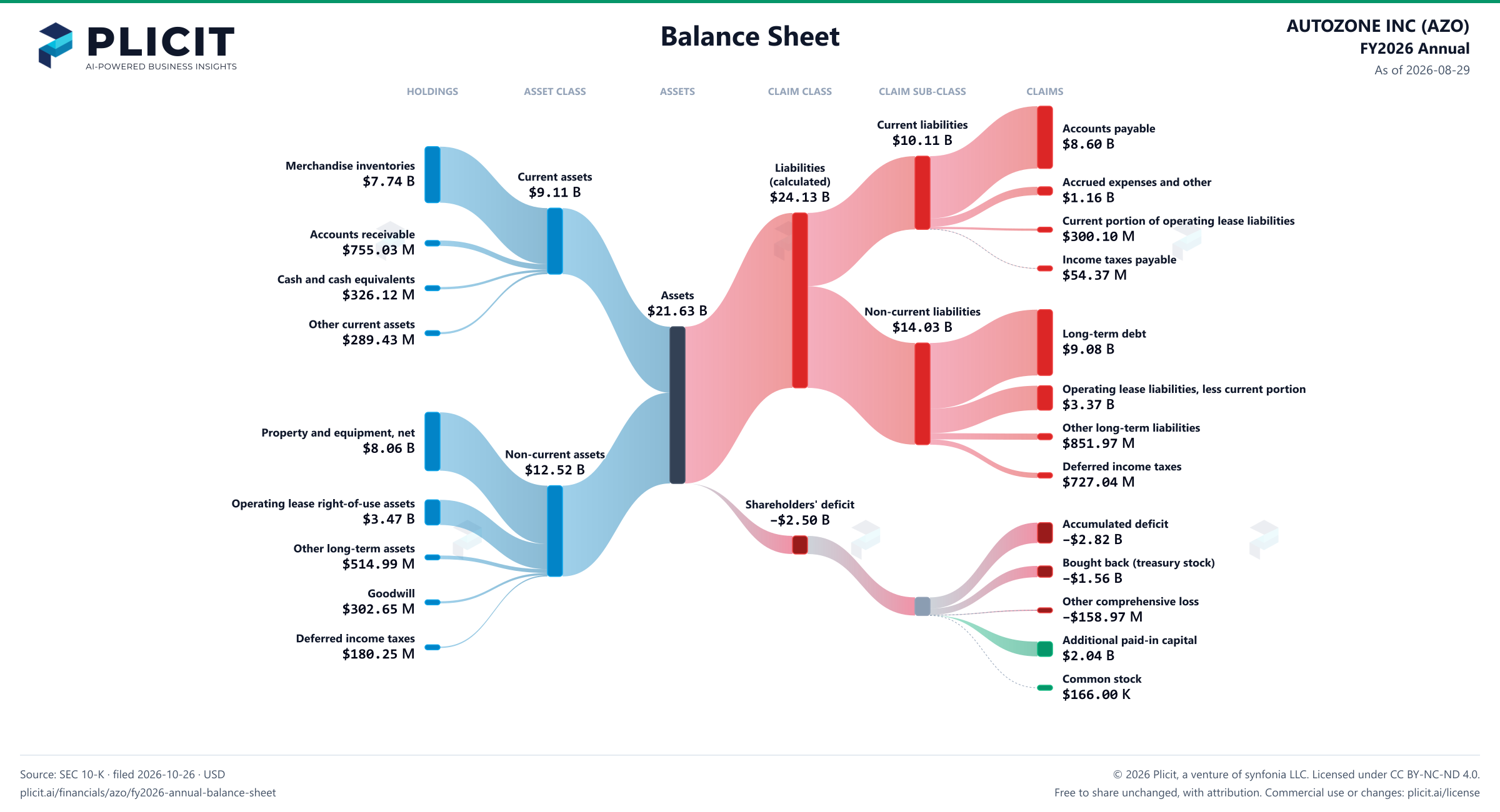
AutoZone's books say its owners are underwater. On August 29, 2026, the company owed $24.13 B and owned $21.63 B, which left shareholders' equity at -$2.50 B. That is still a deficit, though it was -$3.41 B a year earlier, and the gap has narrowed by $0.91 B. Lenders are owed $9.08 B, the biggest share of what it owes, while cash on hand was only $326.12 M. So how does a company with less than nothing keep paying its lenders on time?
Bills due within a year are where the pressure shows up. Current assets of $9.11 B covered 90% of the $10.11 B that falls due within a year. Receivables rose 13% to $755.03 M. Sales grew 7% over the same year. Bank-run payment programs held $5.78 B of what AutoZone owed its suppliers. That is 67% of its accounts payable. Receivables growing faster than sales can mean timing or looser customer terms, and the two readings carry different risks for cash.
Here is the mechanism that matters. The $1.63 B due within a year is the commercial paper and the June 2027 notes. Management says it can refinance them through its revolver, which had $2.20 B of room at year end and no borrowings drawn against it. That plan holds only while interest coverage stays above the 2.5:1 minimum, and it was 5.2:1 on August 29, 2026. What happens to suppliers and lenders if the revolver closes before the notes are refinanced?