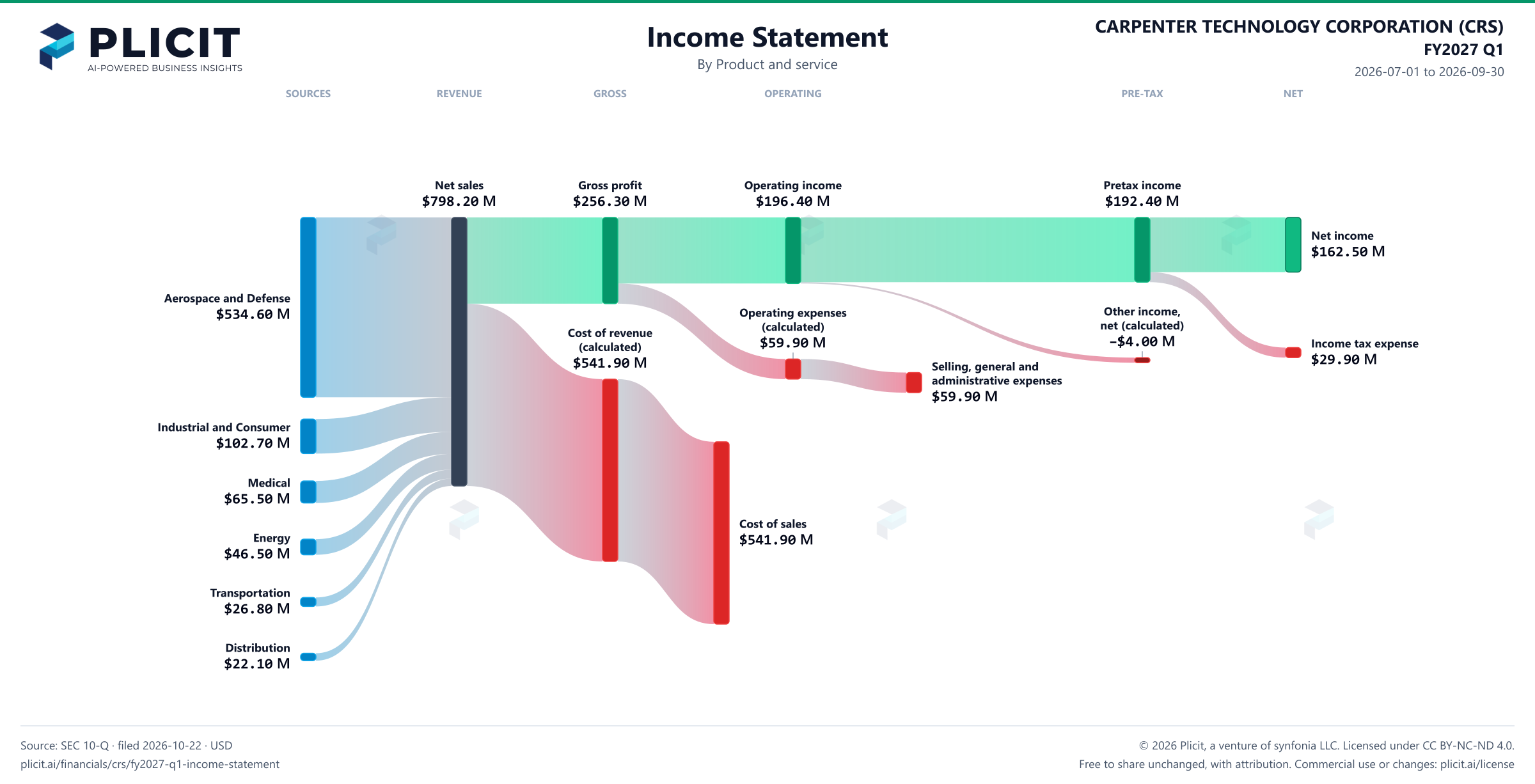
Profit rose 33% without a tax break; sales grew only 9%
Net income rose 33% to $162.50 M, while sales grew 9%, so the profit gain outran the business. The tax line did not do it: the rate was 15.5%, against 15.4% a year earlier, and profit before tax rose 33% too. Operating income rose 28% to $196.40 M, and interest fell from $11.50 M to $7.10 M. Less interest and a larger operating profit explain the rise, so the question is what drove operating profit. Why did operating income grow faster than sales?
Part of the answer is cost discipline: selling, general and administrative costs fell to 7.5% of sales from 8.6% a year earlier. Cost of sales took $541.90 M, the largest expense, and gross margin rose to 32.1% from 29.5%. Gross profit rose $39.90 M, from $216.40 M to $256.30 M. Every other cost line matters less than that one, so the margin story is really the cost-of-sales story. Why did the margin improve, and is it durable?
Carpenter Technology is spending more on equipment: capital spending reached 9.7% of sales, up from 5.8%. Interest is no longer the drag it was, with operating profit covering net interest 27.7 times, against 13.3 times a year earlier. Yet capitalized interest rose to $3.50 M, which moves borrowing cost onto the balance sheet, out of this quarter's expense. What settles it: does the margin hold when spending on equipment rises, or will the next quarter's cost of sales erase the gain?