The IRS wants $28.90 B over where Microsoft books its profits
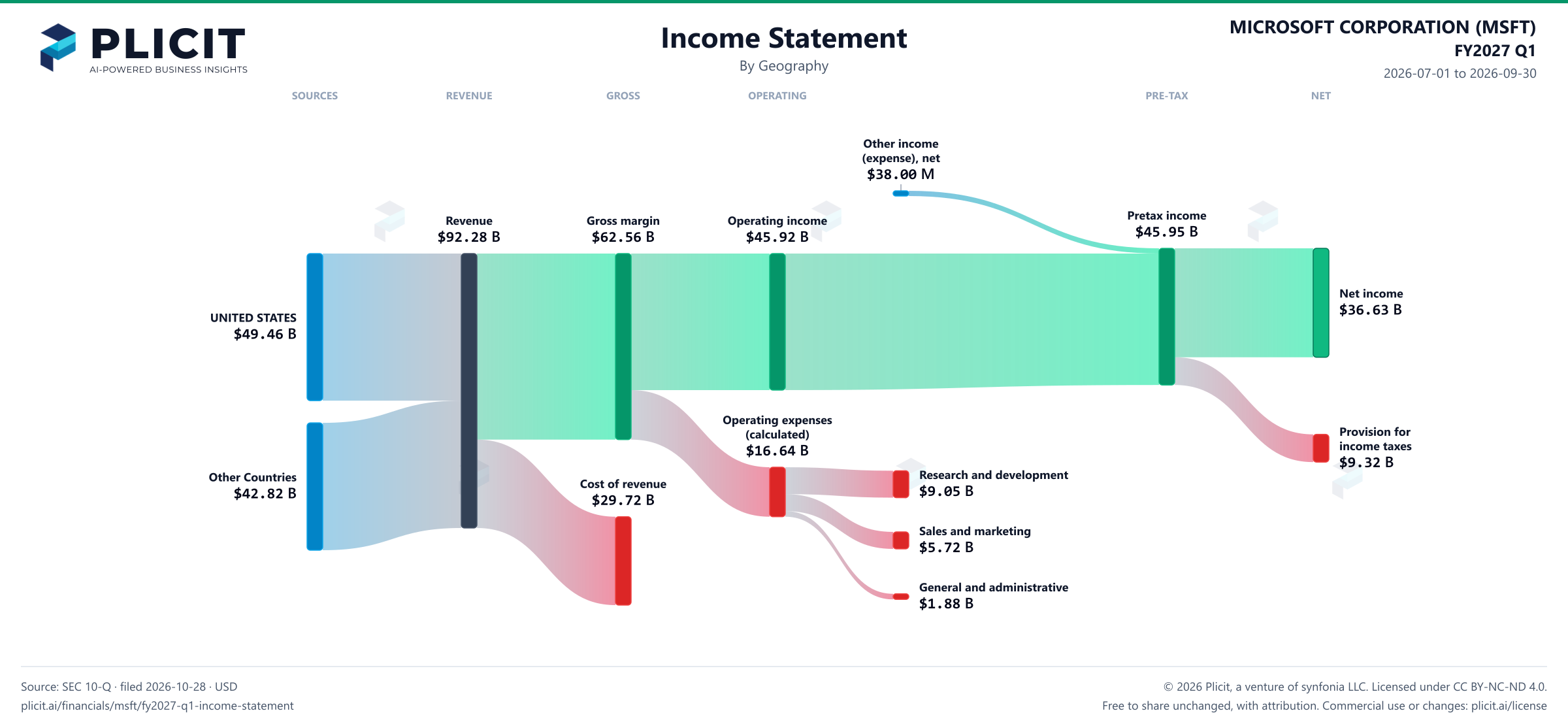
Microsoft's growth this quarter came disproportionately from home. United States revenue rose 23% to $49.46 B in the quarter to September 30, 2026, and supplied 64% of the company's $14.61 B increase in sales; revenue from other countries grew 14%. But the label needs care. Microsoft classifies revenue by the major geographic areas in which its customers were located, and its United States figure includes billings to OEMs and certain multinational organizations because of the impracticability of determining the geographic source of the revenue. Part of what reads as American demand is an allocation convention, not a map of where customers sit.
Where profit lands is a different question from where sales land. Microsoft's effective tax rate was 20%, up from 19%, and it says the rate was lower than the U.S. federal statutory rate primarily due to earnings taxed at lower rates in foreign jurisdictions, through its foreign regional operations center in Ireland. The IRS has disputed how Microsoft split its profit before. For tax years 2004 to 2013 it is seeking an additional tax payment of $28.90 B plus penalties and interest, over intercompany transfer pricing. That sum is larger than Microsoft's $20.28 B of cash. Microsoft says its allowances are adequate and it will vigorously contest the claims.
For investors, the geography split says Microsoft's growth runs through American customers and the multinationals billed there, while revenue from other countries grew 14%. Currency was no excuse either way: management says fluctuations in the U.S. dollar did not have a material impact on reported revenue and expenses from international operations this quarter. The open risk is tax, not sales. An adverse outcome on $28.90 B, before penalties and interest, would equal 79% of this quarter's $36.63 B of net income. If the IRS wins on transfer pricing, how much of the low tax rate behind Microsoft's profits survives?