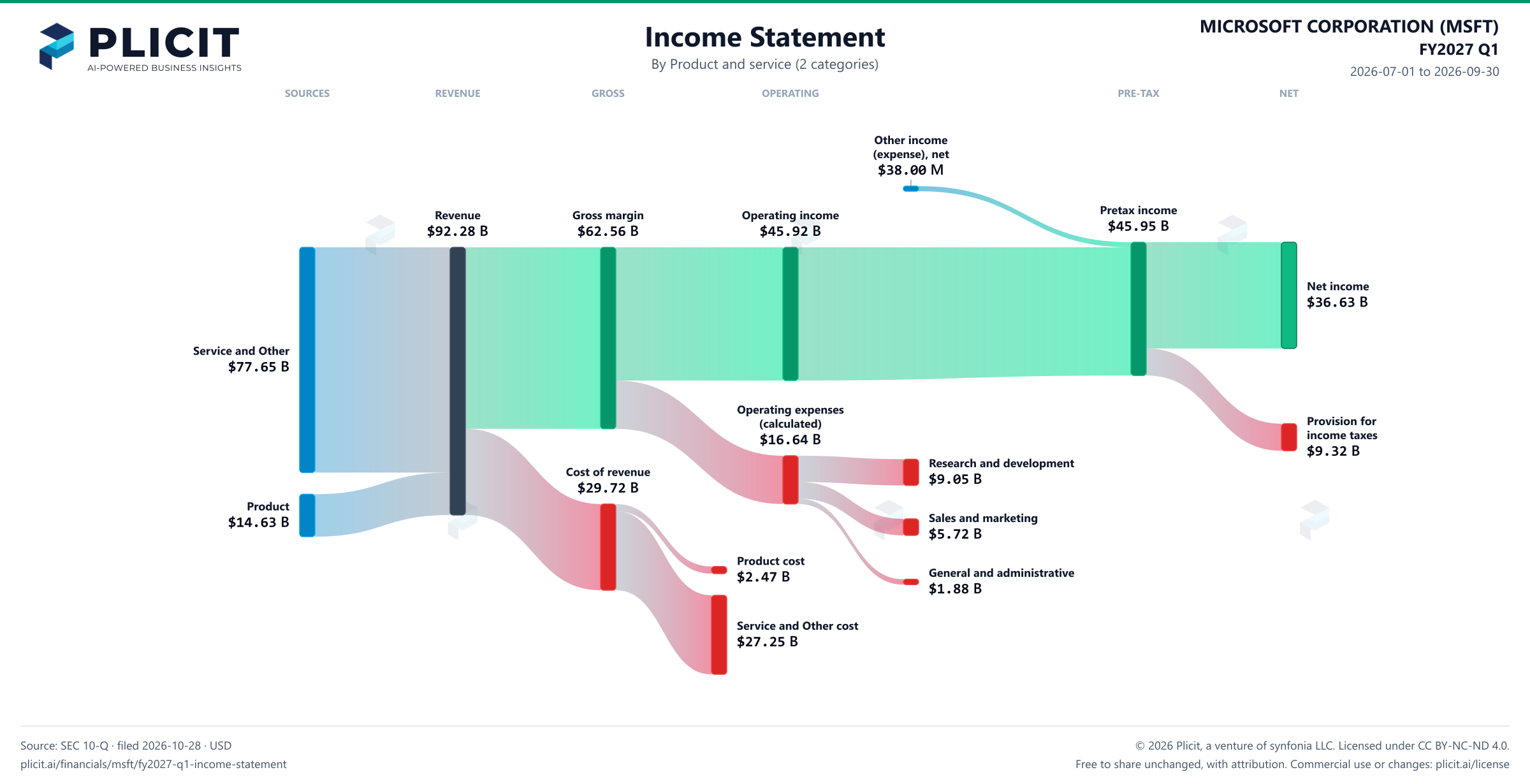
Microsoft's service costs grew 29%, outrunning service sales at 26%
Microsoft's sales are now overwhelmingly services, and services are getting more expensive to deliver. Service and other revenue rose 26% to $77.65 B in the quarter to September 30, 2026, while the cost of delivering it rose 29% to $27.25 B. That gap squeezed the share of service sales kept after direct costs to 64.9%, from 65.8% a year earlier. Management traces the Agents and Infra segment's 35% rise in cost of revenue to investments in datacenter infrastructure to support growing customer demand across Azure and Microsoft 365 cloud. Is the most important line in the business turning into a lower-margin one?
The other line is going the other way. Product revenue fell 8.1% to $14.63 B, and product cost of revenue fell to $2.47 B. Products kept 83.1% of sales after direct costs, up from 81.6%, which makes the shrinking line the richest one. Management's explanations point to Windows OEM and devices, down 22% on the benefit from Windows 10 end of support demand in the prior year, inventory drawdowns and weaker PC market demand, and to Productivity and server licensing, down 3% as Microsoft laps the benefit from product launches in the prior year. Mix is moving from the richest dollars to thinner ones.
For investors, this is the trade Microsoft is making: lower-margin cloud services at enormous scale in place of high-margin licenses. It still works: gross margin was 67.8% of total sales this quarter. But services now carry 92% of the cost of sales, and that cost is rising faster than the revenue it supports. Research and development of $9.05 B equalled 62% of product sales, a reminder that the software behind the services is not getting cheaper either. When the datacenters now being built reach full depreciation, will service margins hold, or keep sliding?