DaVita's dialysis growth is price, not patients, with volumes up 0.4%
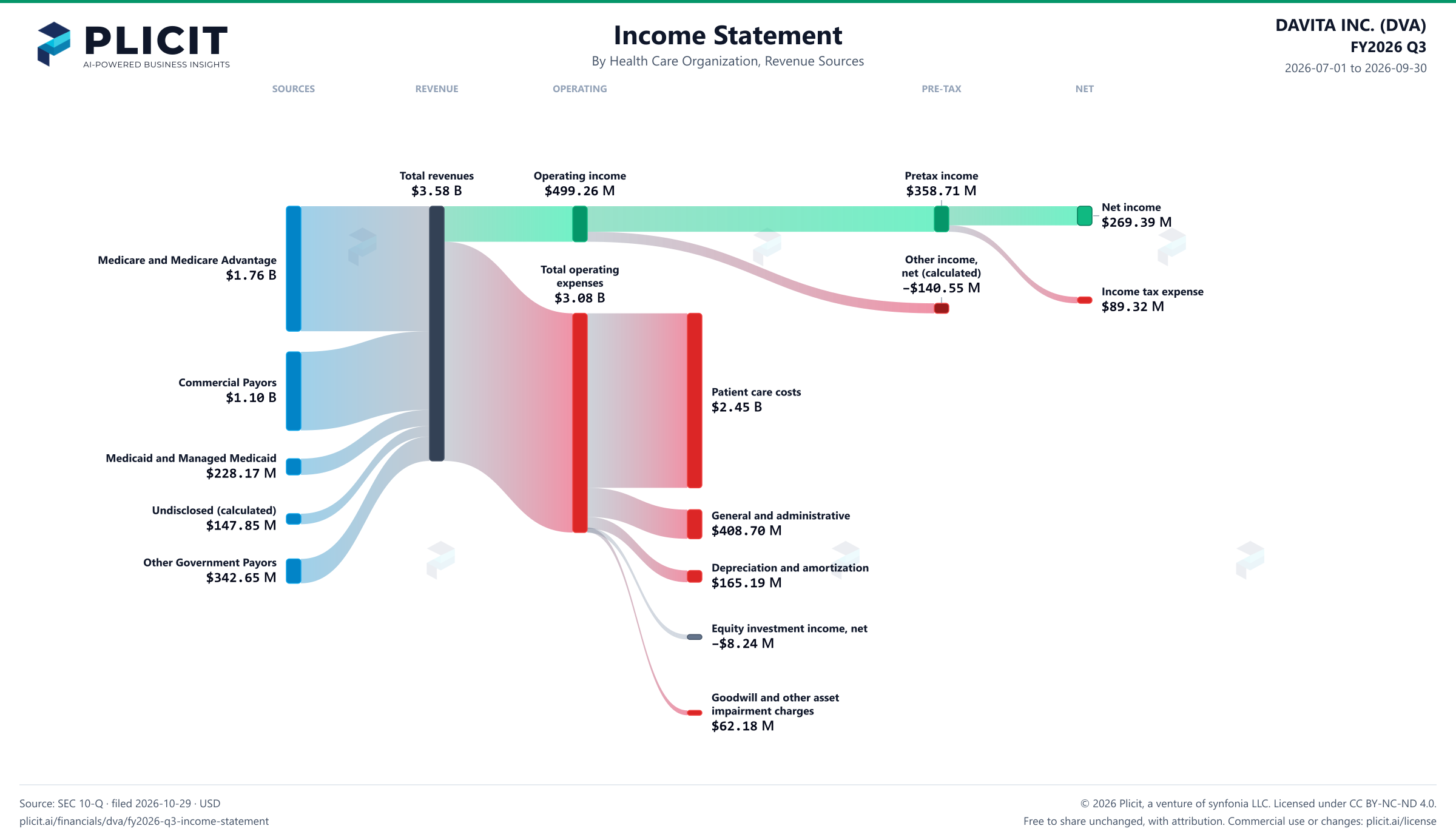
DaVita's dialysis business is barely adding patients. Normalized U.S. treatment growth, which strips out acquisitions, was just 0.4% from a year earlier. Yet revenue rose 4.6% to $3.58 B. The payer split shows who paid for that: Medicare and Medicare Advantage brought in $1.76 B, up only 2.4%, while commercial payors grew 4.5% to $1.10 B and Medicaid 6.3%. Commercial insurers supplied 30% of the $157.90 M rise in revenue. So growth leans on price and on payers outside Medicare, not on more people in chairs.
Why does the mix matter? Management says year-to-date revenue per treatment rose mainly on Medicare base rate and other annual rate increases, partially offset by unfavorable changes in payor mix. This quarter, revenue per treatment dipped from the second quarter, which management puts down to normal fluctuations. Medicare and Medicare Advantage still made up 49% of revenue, against 50% a year earlier. With the largest payer group setting its own base rate, DaVita's growth rides on each annual update. Volume, the lever it controls, has stalled.
For investors, the question is how long price can carry a business whose patient volumes barely grow. Medicaid and Managed Medicaid grew fastest, up 6.3%, but at $228.17 M it is small. Commercial payors, the second-largest source at 31% of revenue, decide most of the upside. Outside patient care, other revenues jumped 39% to $169.86 M, a sideline rather than a fix. Watch normalized treatment growth and the payer mix in each quarter's filing. If volumes stay flat and Medicare's rate updates slow, where does DaVita's next dollar of growth come from?