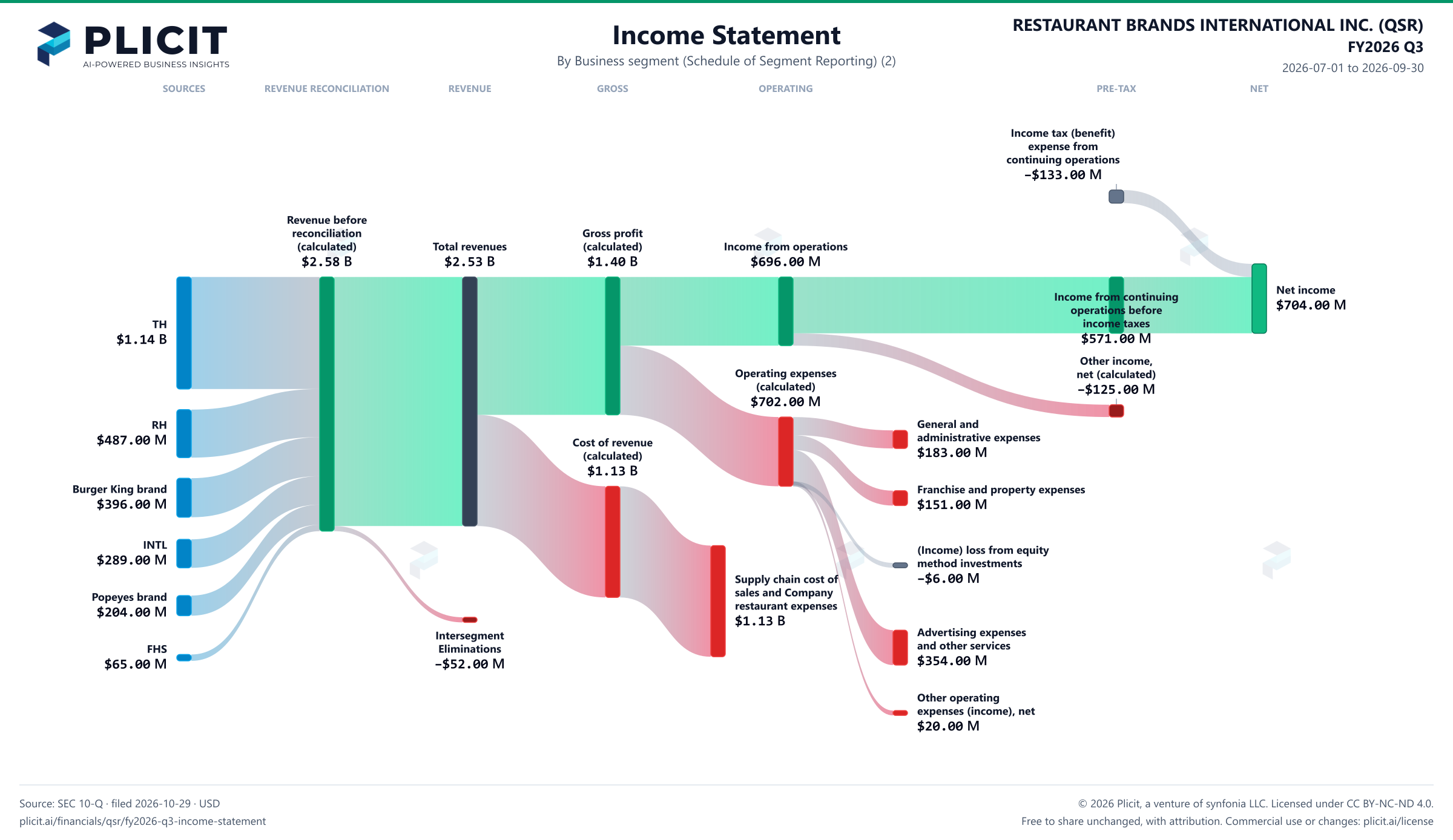
Tim Hortons carries the top line, and its growth is thin
Tim Hortons brings in $1.14 B a quarter, 45% of the company's $2.53 B of revenue. That is a large share of all sales resting on a single brand, so the company's fortunes lean hard on one coffee chain. Restaurant Holdings is next at $487.00 M, and the rest of the business sits well below it. Burger King alone sold $51.00 M to sister businesses, so part of the top line is the company selling to itself. Read with the balance sheet, that concentration is the first thing to test.
Why is Tim Hortons so heavy? Its revenue rose from $1.13 B a year earlier to $1.14 B this quarter, a gain of about 1.0%. Its growth comes from equipment sales to franchisees and commodity prices, which the filing names as the main cause. Franchise and property revenues added more, primarily from increased system-wide sales. Stripped of currency effects, the rise was 2.4%, against 1.0% as reported. The management story is commodity prices and equipment sales, while the currency line is a drag the headline number hides.
For investors, the question is quality: growth tied to commodity prices is not the same as more restaurants selling more. Tim Hortons is the largest brand and the one with most of the goodwill, so its growth carries the whole balance sheet's story. Its goodwill is a bet on that growth continuing, and the filing gives no separate forecast for it. Watch whether system-wide sales keep lifting its franchise and property revenues, and whether the currency swing reverses. Would Tim Hortons still grow at 2.4% if commodity prices and franchisee equipment sales stopped rising?